Overview
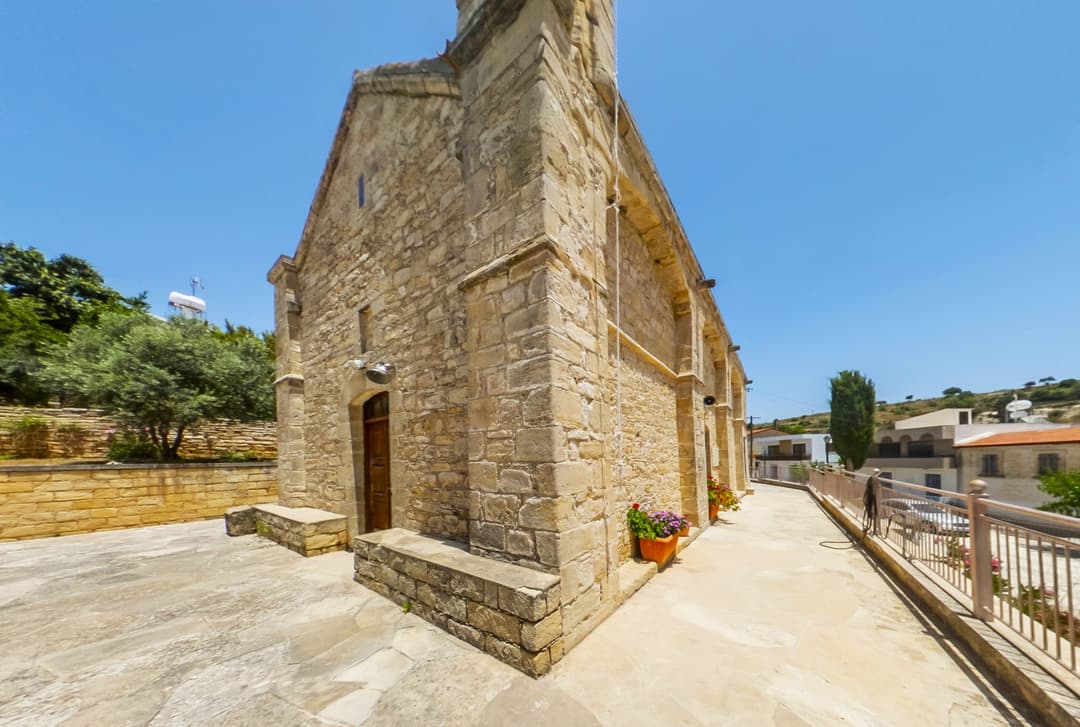
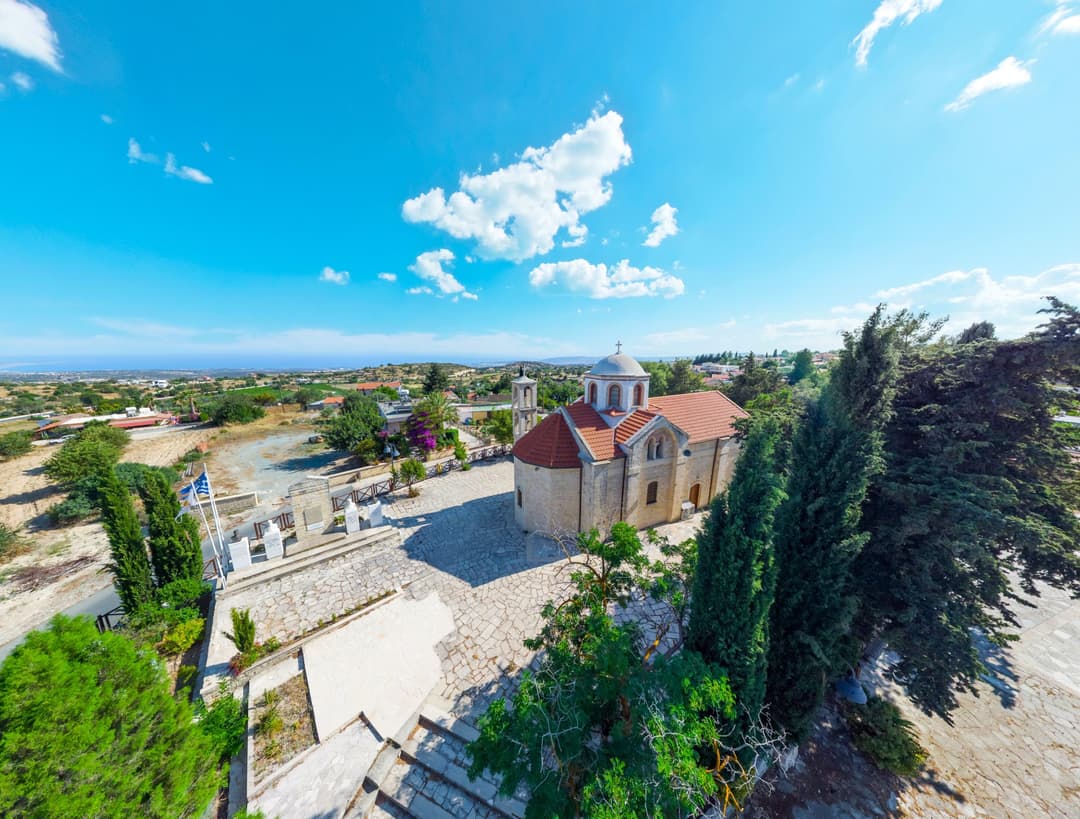
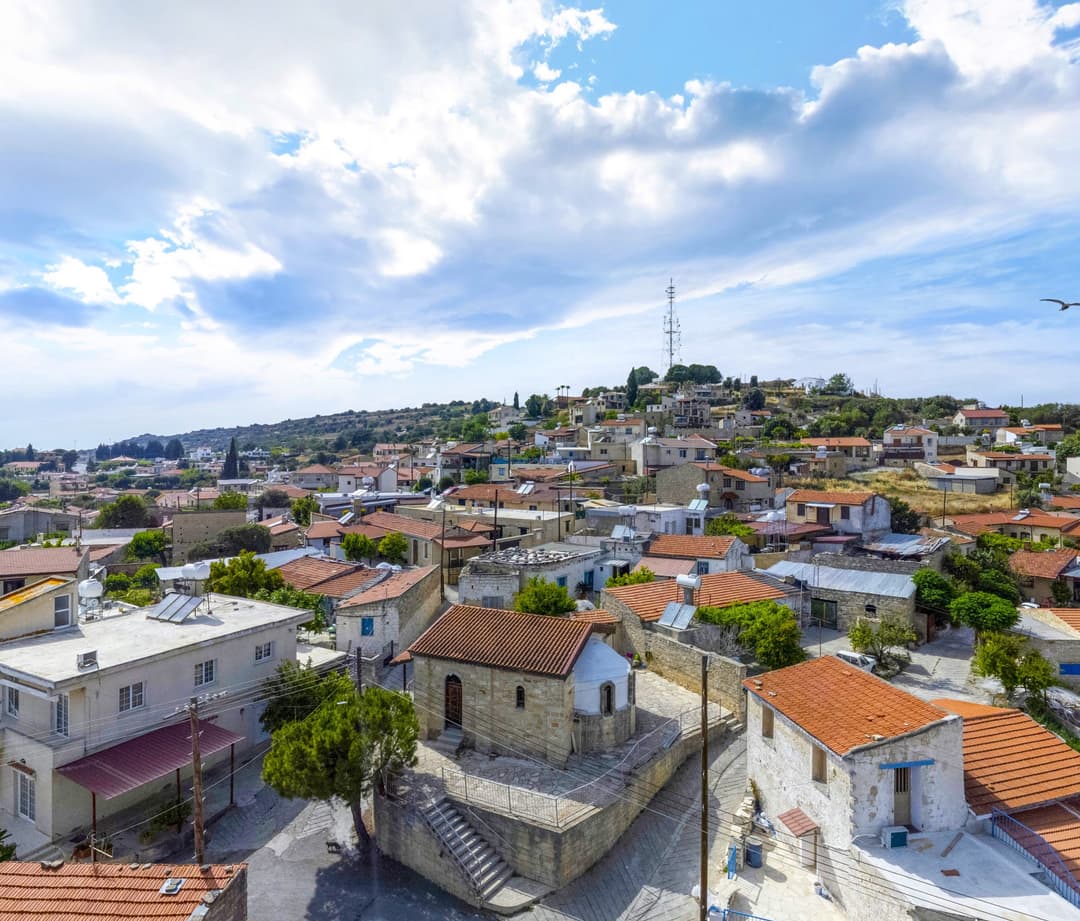
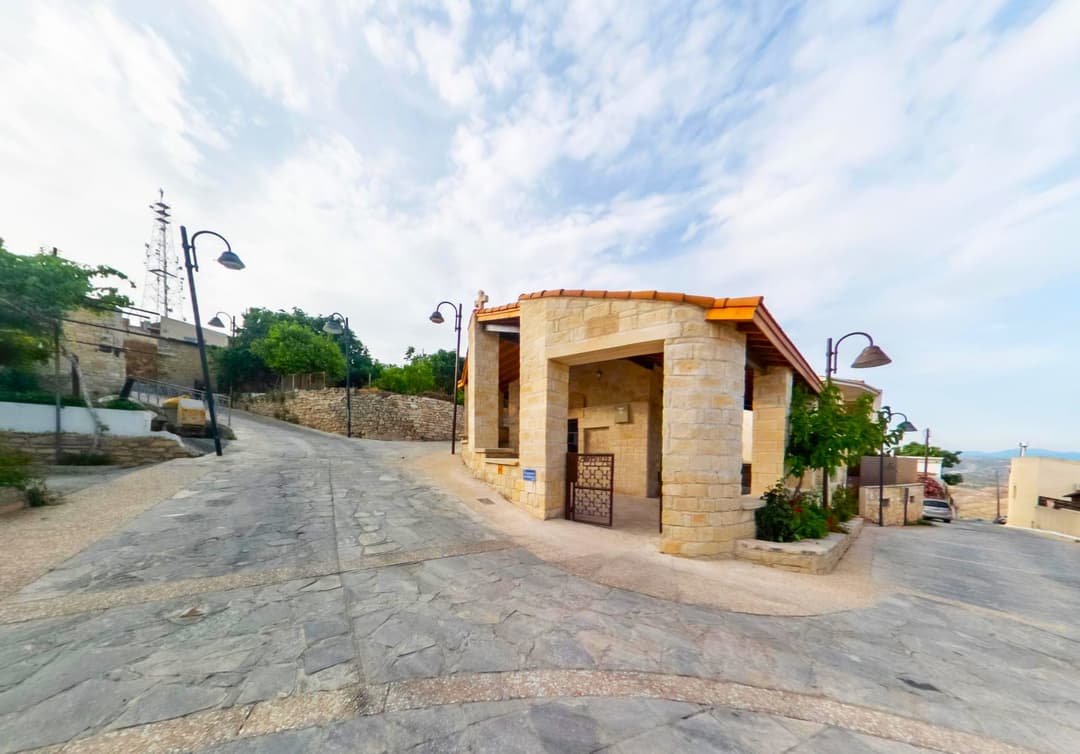
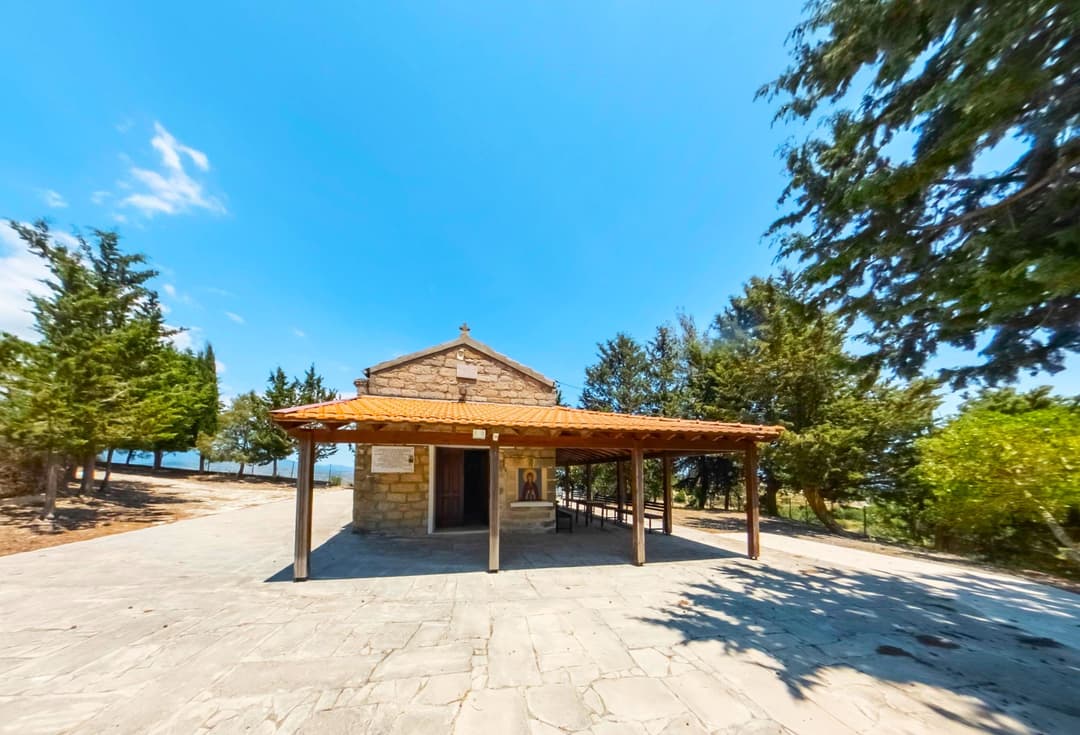
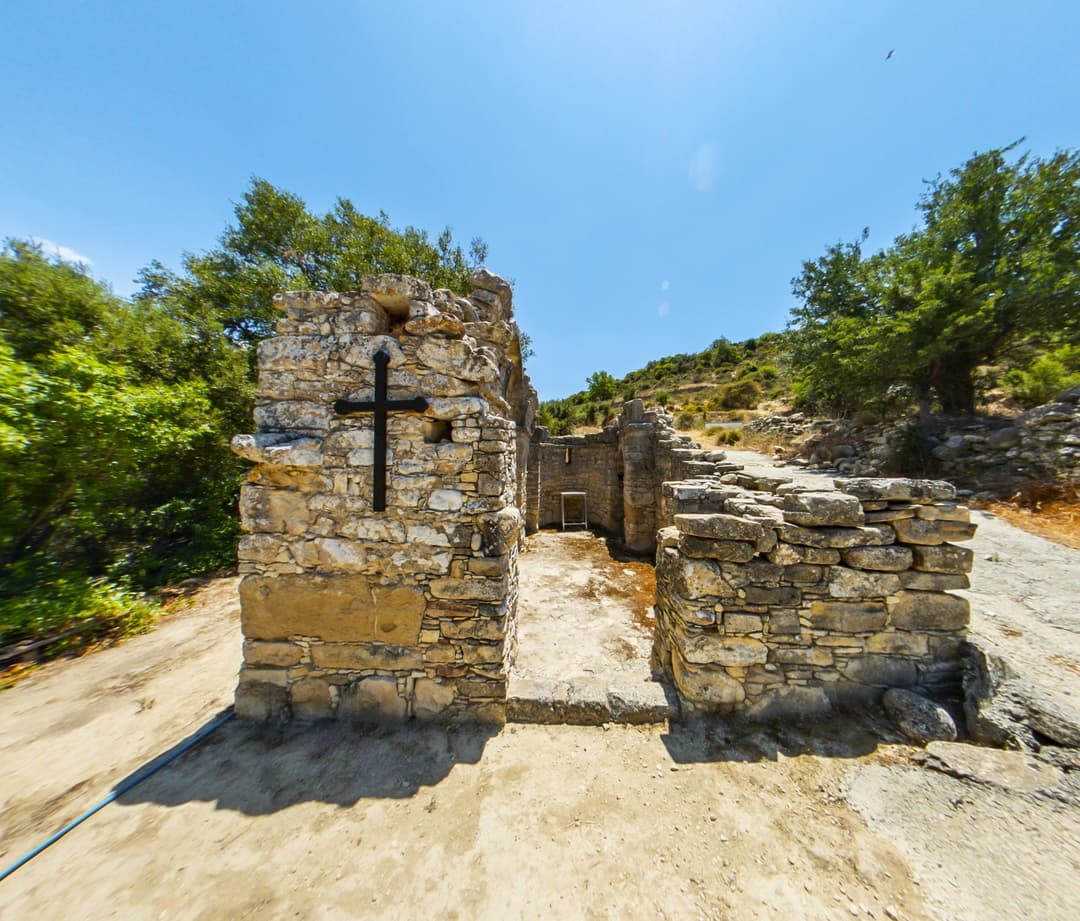
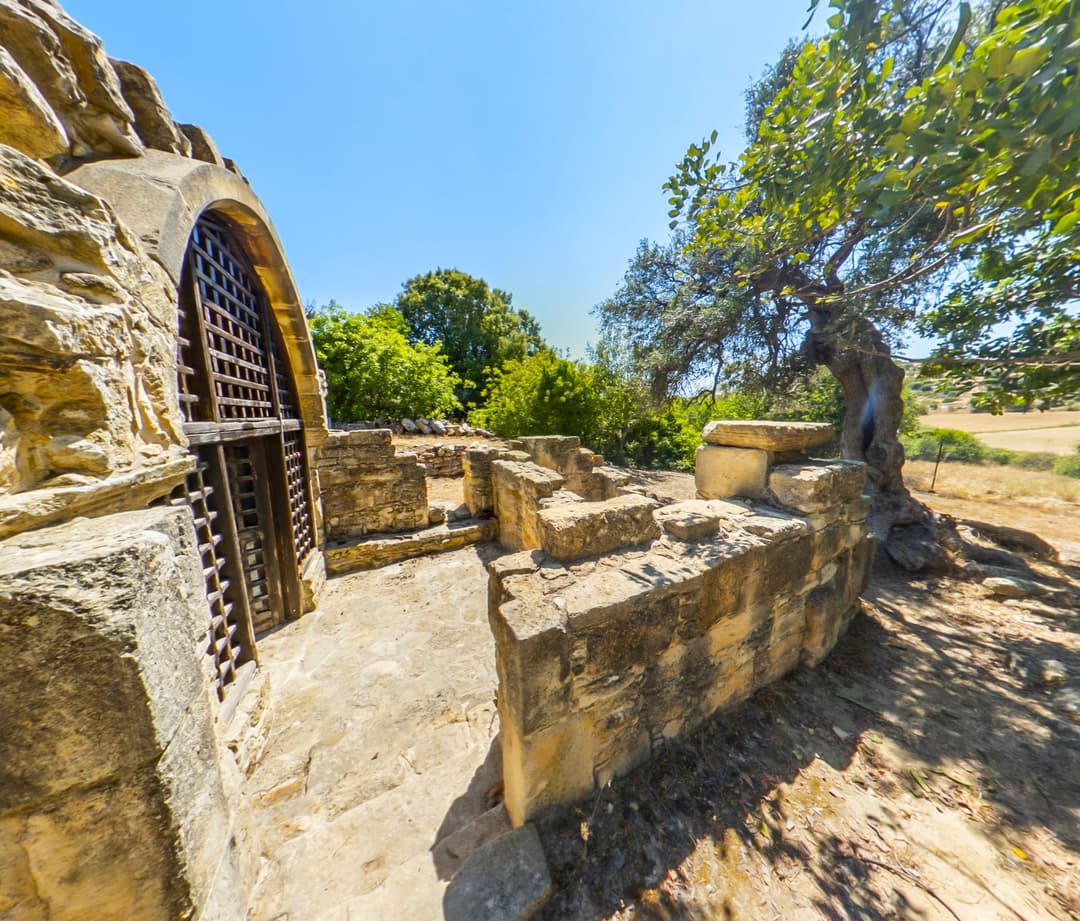
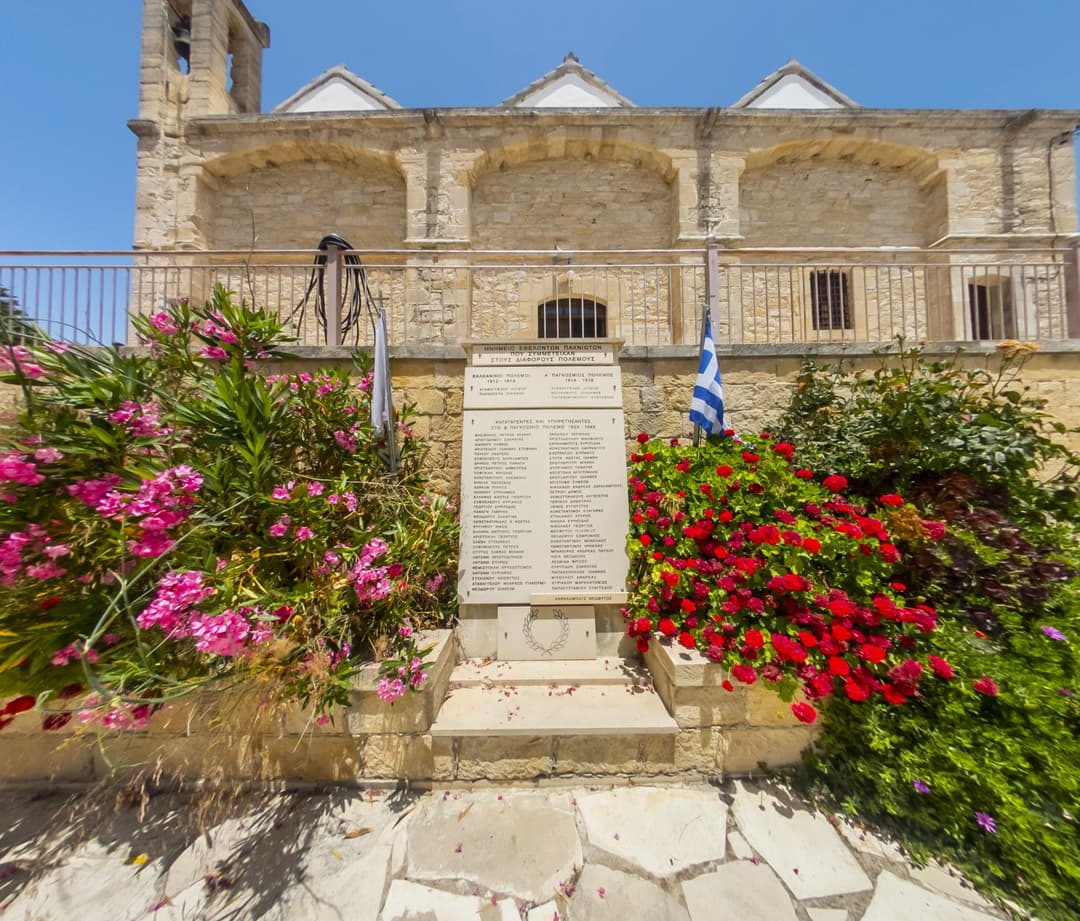
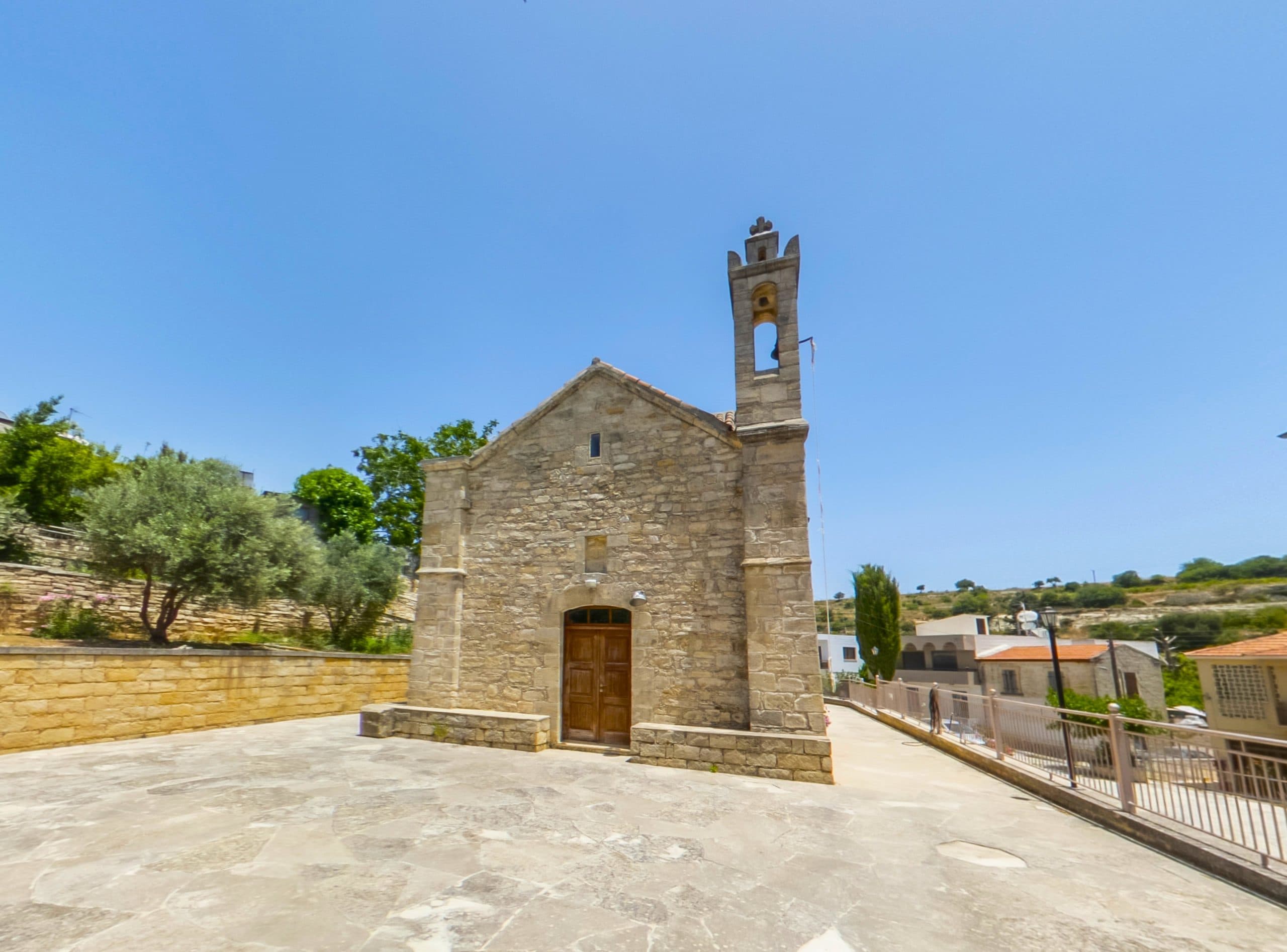
The small church of Panagia Katholiki was built in 1849 by Ioannis Mentzis, a native of Smyrna who was expelled from the Ottoman Empire in 1821. For the construction of the church, individual elements were used that had been established during the Frankish and Venetian periods. These elements are the pointed arches and the cross-vaults, a feature that is found in many parish churches at the end of the Turkish rule in Cyprus. The architecture of the church is of a basilica type, covered by six cross-vaults with simplified pointed arches. It does not have a dome, and also has no openings, except for two entrance doors, seven very small lunettes on the facades of the cross-vaults, and a small window in the center of the sanctuary. The plan of the church has a rectangular shape, and the apse has a five-sided shape towards the east. The entrance is made through two wooden doors, one on the southern side and one on the western side. The external appearance of the church shows symmetry and repetition of elements. There are four buttresses on the southern facade, four on the northern facade, and their connecting arches support the transverse thrusts of the cross-vaults. The buttresses are wider than the arches, which are lowered and the windows are very small. The church has a pitched roof covered with tiles and its walls are made of limestone blocks. The interior is covered with a flat wooden ceiling painted with images of saints, while the sanctuary is separated from the nave by an iconostasis made of wood and painted with icons. The Church of Panagia Katholiki is located in the southwest corner of the village and has a tall and imposing bell tower. During the period of Ottoman rule, the use of bells was prohibited, which meant that many churches built during that time did not have bell towers. Therefore, it is assumed that the bell tower was constructed after the British took over and lifted the ban, in full contact and construction continuity with the rest of the church. According to local tradition, the church was built on the ruins of a Catholic monastery dedicated to Panagia, which is confirmed by the name of the area, which is still called "monastery," and by the old well in the village called "gerolakkos" (holy well). The beautiful icon of Panagia belonged to the old monastery and was found wrapped and well hidden inside a collapsed structure of the old Catholic church during the reconstruction of the new church. It is believed that the last monk of the monastery hid it before he either abandoned it due to violent and compulsory removal or due to his inevitable death. Today, the icon is preserved in the church. The name "Katholiki" may have originated from the fact that the old church was a Catholic church, and after the Orthodox took over, they preserved the name to honor the previous history of the site. The Church of Panagia Katholiki is a significant religious and historical monument and a must-visit destination for anyone interested in exploring the rich cultural heritage of the island.